LimX Luna for Research and Development: A Technical Evaluation
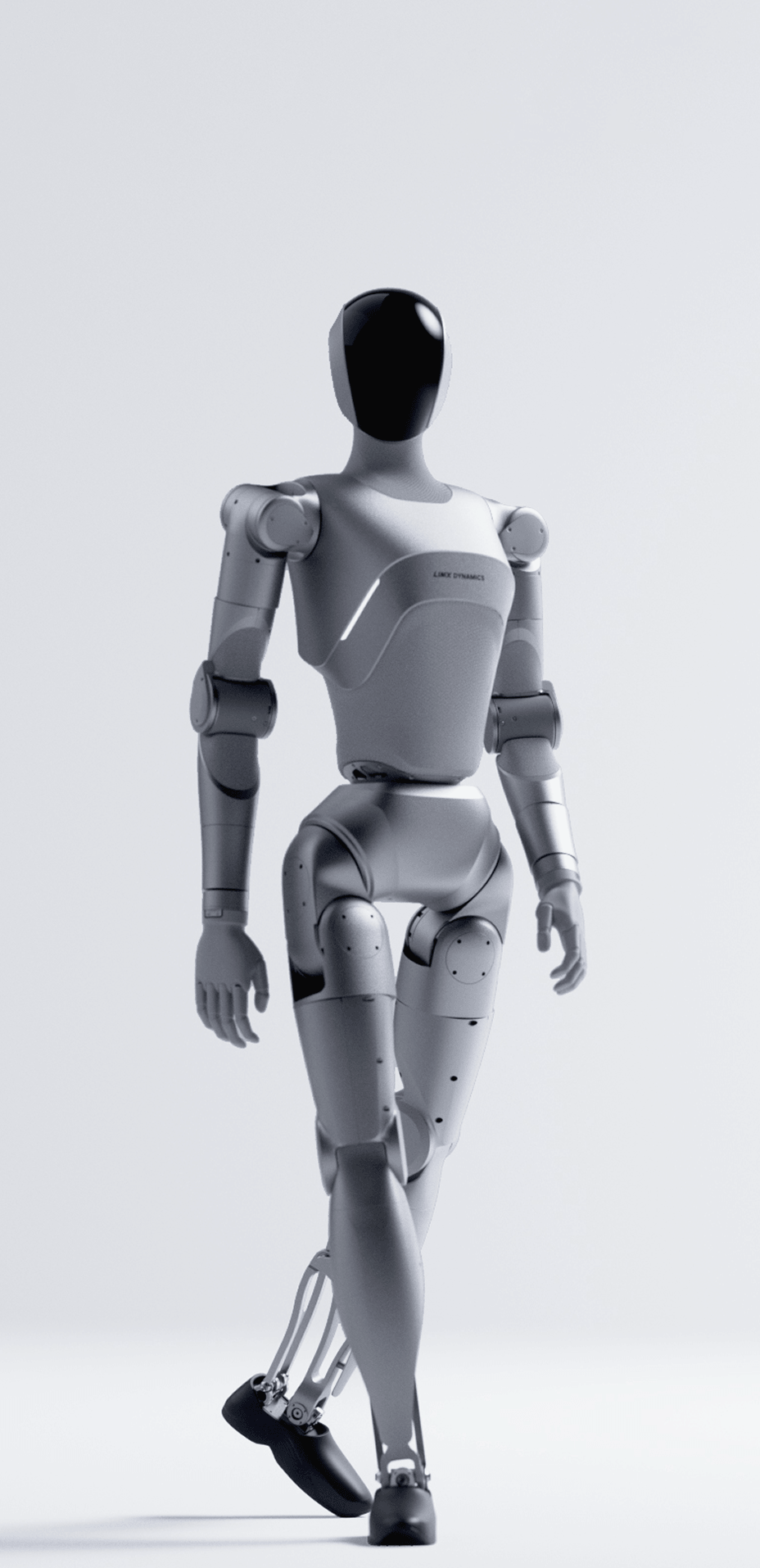
A 160 cm, 27-DoF humanoid marketed for live performance. We examine where the LimX Luna genuinely serves a research programme — field HRI, learning from demonstration, multi-agent coordination — and where a lab should buy the TRON 1 or OLI instead.
Abstract
Full-size humanoid robots are increasingly marketed to research groups, but the platforms differ far more than their similar silhouettes suggest. This evaluation examines the LimX Luna — a 160 cm, 27-degree-of-freedom humanoid released by LimX Dynamics — and asks a narrow question: where does it earn a place in a research and development programme, and where should a lab buy something else?
Our conclusion is that Luna is a strong instrument for a specific band of work — human-robot interaction in public settings, learning from demonstration, multi-agent choreography, and education and outreach — and a poor choice for locomotion, reinforcement-learning or manipulation research, for which LimX sells more suitable hardware. We set out the evidence for both halves of that claim.
1. What Luna is, and what it is not
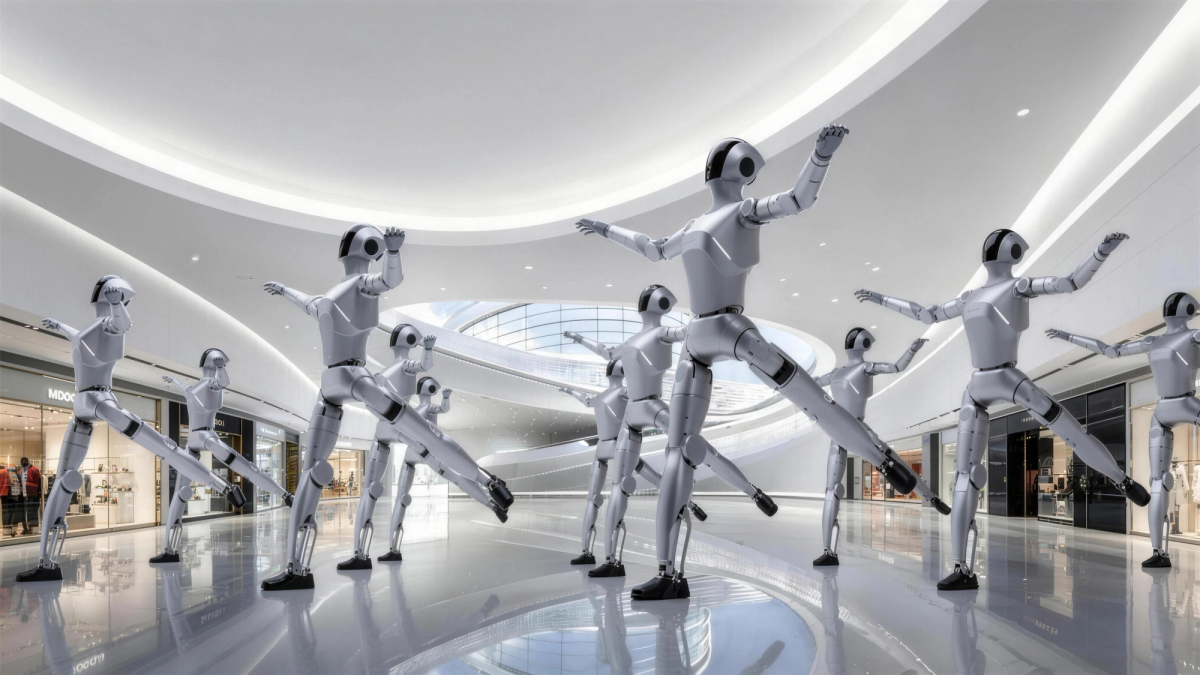
It is worth being blunt at the outset, because the marketing category and the research category do not coincide. LimX positions Luna around live performance and public engagement: its headline capabilities are dance, gymnastics and catwalk routines, a facial interaction screen, and synchronised control of large fleets. The manufacturer's own application list names shopping malls, museums, theme parks, live stages and brand events before it names research.
By contrast, LimX markets the TRON 1 explicitly as "The Gateway to Humanoid RL Research", and the OLI as a general-purpose humanoid for embodied-AI work. A lab that buys Luna expecting a reinforcement-learning testbed has bought the wrong machine from the right vendor.
That does not make Luna research-irrelevant. It makes it relevant to different research. The sections below separate the two.
2. Platform architecture
The kinematic budget is where a humanoid's research value is decided, so it is worth reading closely. Luna distributes 27 active degrees of freedom as follows.
| Chain | Degrees of freedom | Range |
|---|---|---|
| Leg (each) | 6 | Hip P −90°~175°, R −60°~90°, Y ±90°; knee P +5°~140°; ankle P −35°~58°, R ±25° |
| Arm (each) | 5 | Shoulder P −60°~175°, R −5°~110°, Y −90°~145°; elbow P −30°~137°; wrist Y ±90° |
| Waist | 3 | P −45°~30°, R ±30°, Y ±90° |
| Neck | 2 | P ±30°, Y ±45° |
| End effector | optional | Humanoid or fist-shaped hand; 5-finger hand (6 DoF) optional |
Two observations follow directly. First, five degrees of freedom per arm with a single wrist axis is a performance-oriented arm, not a manipulation arm — there is no wrist pitch or roll, so end-effector orientation is heavily constrained. Combined with a 3 kg maximum arm payload, Luna is not a platform for grasping or dexterous manipulation research unless the optional 6-DoF five-finger hand is fitted, and even then the wrist remains the bottleneck.
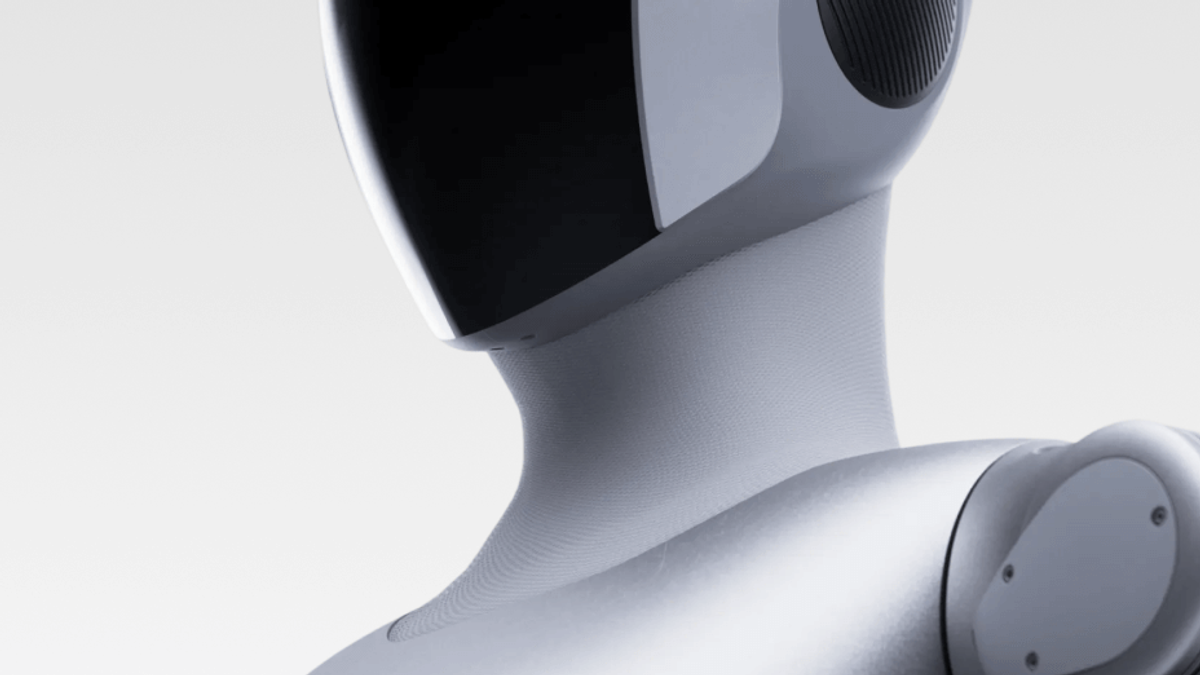
Second, a three-degree-of-freedom waist and a two-degree-of-freedom neck are unusually generous for a robot in this class. Both are expressive rather than load-bearing features, and they are precisely what whole-body gesture, gaze and social-signalling research needs.
| Subsystem | Specification |
|---|---|
| Motion control compute | RK3588 / 16 GB / 256 GB |
| Perception compute | RK3588 / 8 GB / 32 GB |
| IMU | 6-axis, developed in-house |
| Camera | RGB |
| Interaction hardware | Facial screen, microphone, speaker, LED strip |
| Communication | Wi-Fi 6, Bluetooth |
| Peak motor torque | 200 N·m (highest-torque joint) |
| Max walking speed | 5 km/h |
| Cooling | Main control air cooling |
The compute story deserves a caveat. Two RK3588 modules are a capable embedded arrangement for running a motion stack and an RGB perception pipeline, but this is not a discrete-GPU platform. Groups intending to run large vision-language-action models on board should confirm the current compute options with the manufacturer rather than assume headroom; the perception module in particular ships with 8 GB of RAM.
3. Where Luna earns its place in R&D
3.1 Learning from demonstration
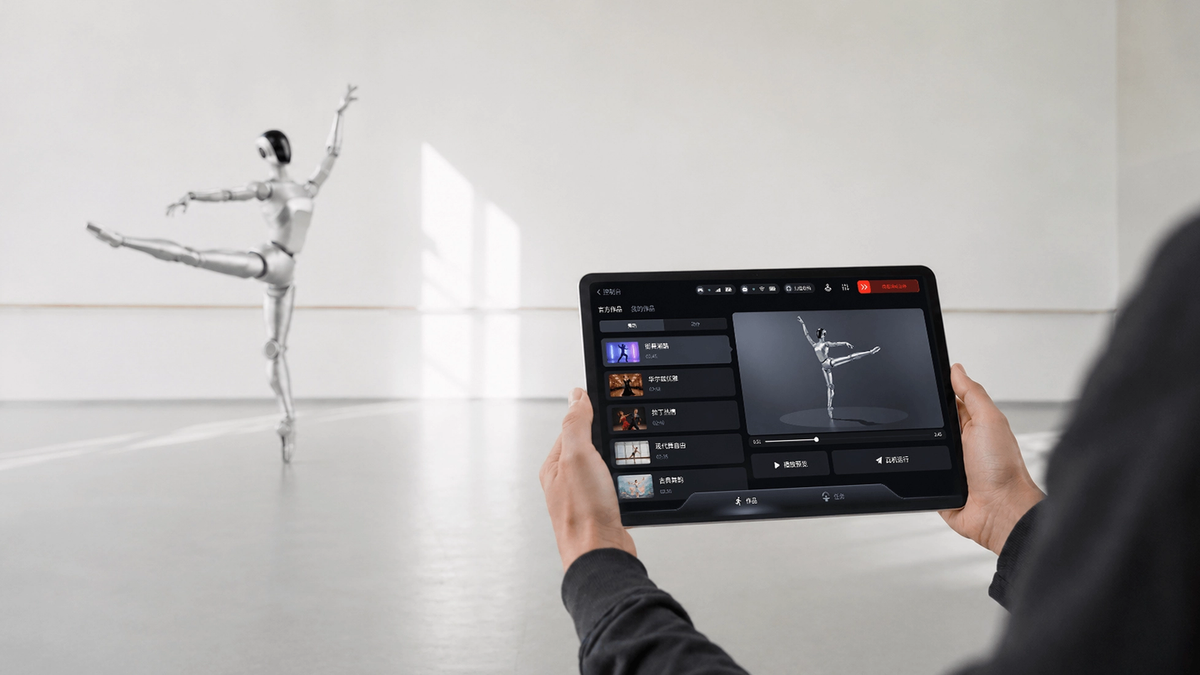
Luna's most research-relevant feature set is its demonstration pipeline. Three distinct routes exist for getting motion into the robot without writing a controller.
🎞️Video to Motion
Import a video; the system analyses the movement and reproduces it on the robot. A direct route from human motion in the wild to whole-body robot motion.
🤲Kinesthetic teaching
Physically guide the robot through a trajectory and record it — the classic lead-through method, applied to a full-size humanoid rather than an arm.
📚Preloaded library
20 dance routines and 20 motion actions ship with the robot, usable as baselines or as starting points for modification.
☁️Cloud motion-capture training
LimX Studio provides a hosted motion-capture training pipeline. Note this is a subscription service, not a perpetual entitlement.
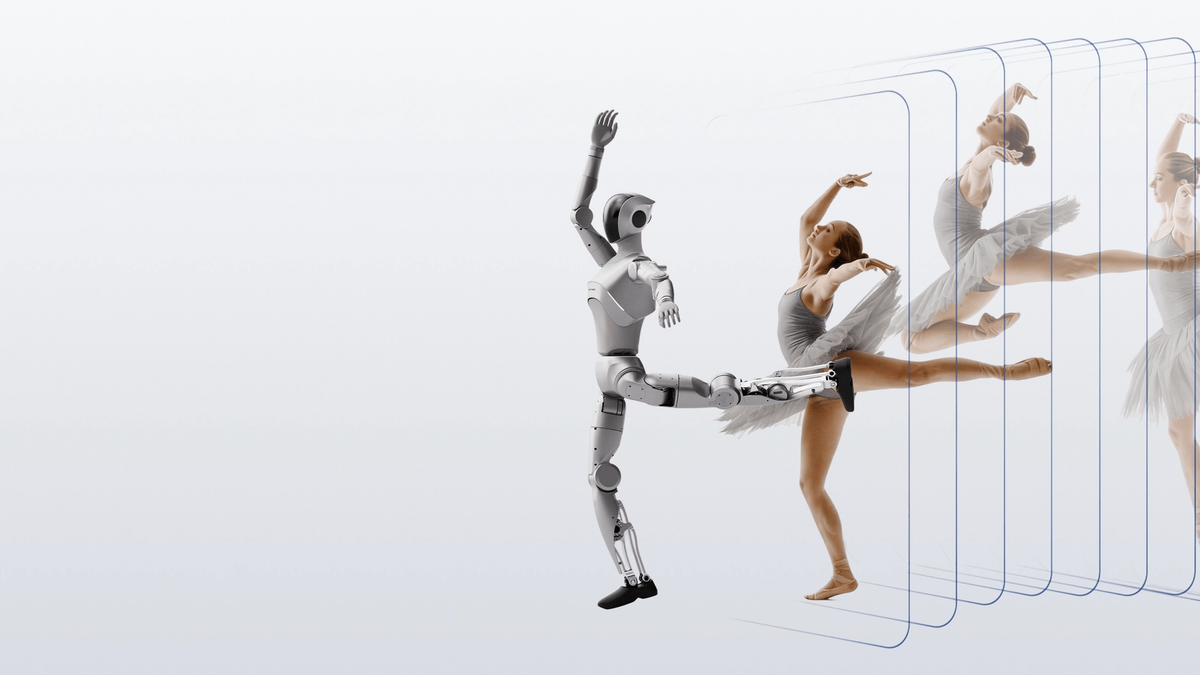
For a group studying imitation learning, motion retargeting or the human-to-humanoid correspondence problem, this is the platform's real argument. The value is not that these methods are novel — lead-through teaching and video-based retargeting are both well-established — but that they arrive integrated and supported on a 27-DoF full-size body, which removes a great deal of undifferentiated engineering from the front of a project.
3.2 Human-robot interaction in public settings
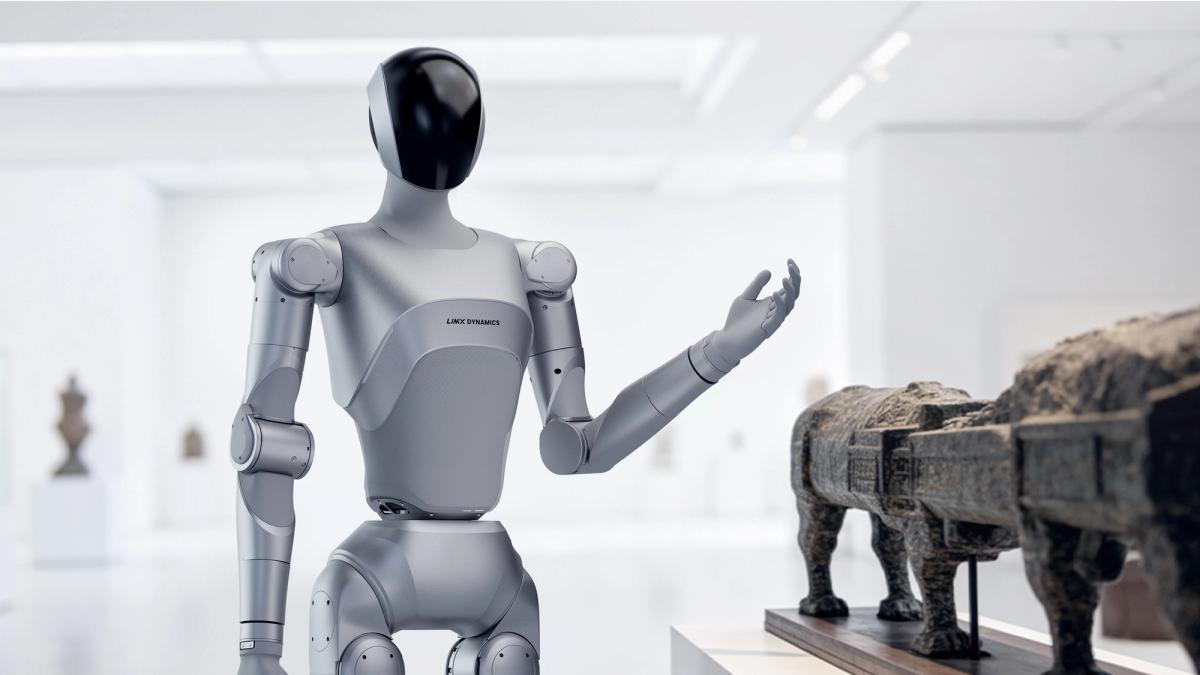
A great deal of HRI literature is produced in laboratory conditions with recruited participants who know they are in a study. Field HRI — unrecruited members of the public, uncontrolled lighting and acoustics, bystander effects, children — is harder to run precisely because most research humanoids are too fragile, too slow to set up, or too alarming to deploy in a public space.
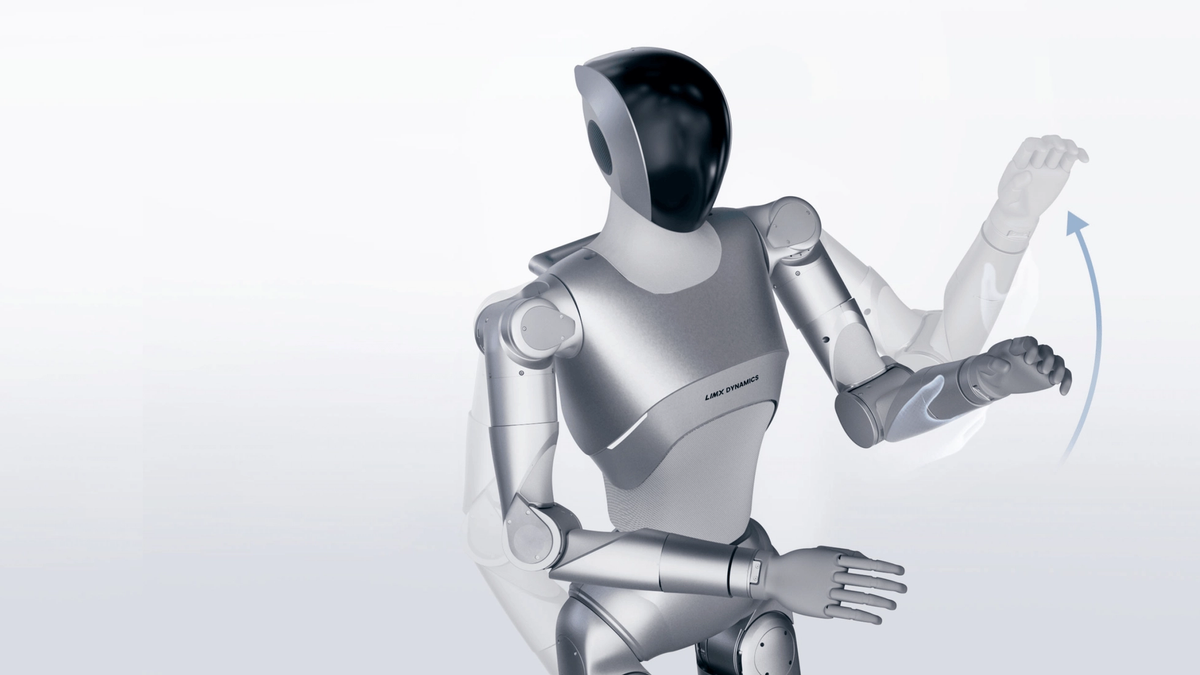
Luna is engineered for exactly that environment, and the features that make it a good performance robot are the same ones that make it a viable field-HRI instrument: a facial interaction screen and LED strip for legible state signalling, multi-modal interaction with natural gesture responses during conversation, roughly four hours of endurance with hot-swappable batteries, and a transport case as a standard accessory.
3.3 Safety architecture for human-subject work
Any study placing a 56 kg humanoid near untrained people has to satisfy an ethics board. Luna ships four independent safety mechanisms, and their presence is a material part of the research case because it shortens the approval path.
🛡️Active fall mitigation
The robot attempts to control its own descent rather than toppling freely.
📡External force sensing
Contact and applied force are detected, enabling reaction to unexpected human contact.
🛑Hardware E-stop
A physical emergency stop independent of the software stack.
⚙️Safe action override
Unsafe commanded actions can be intercepted before execution.
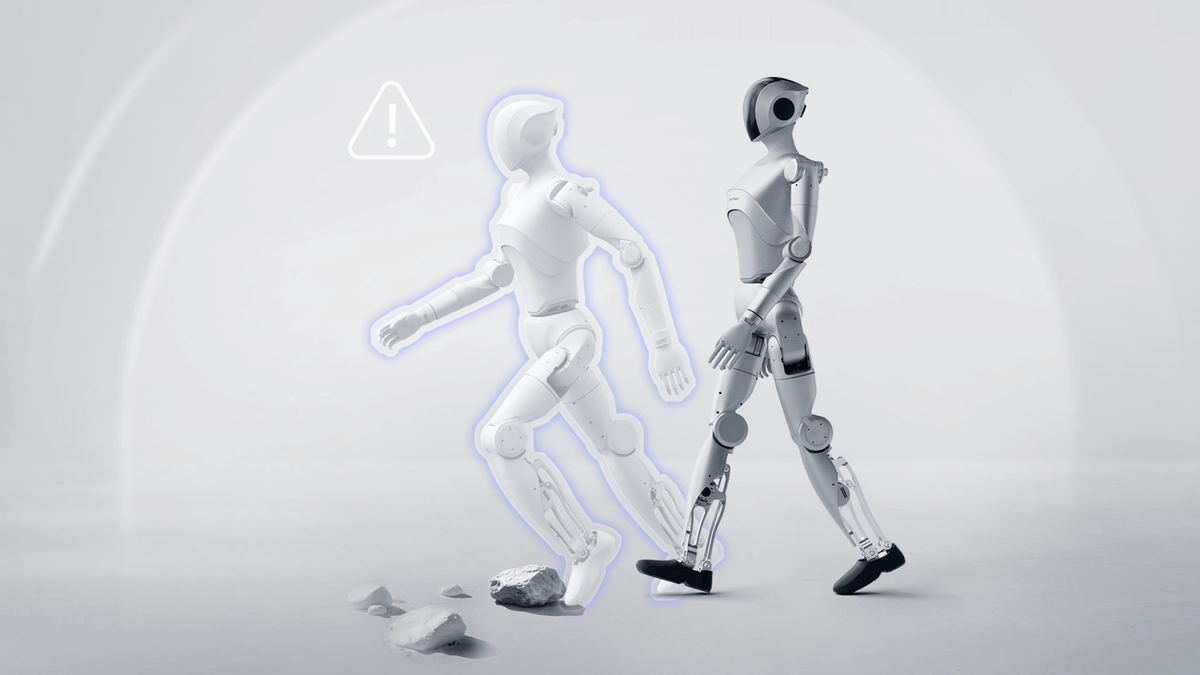
A hardware emergency stop that does not depend on the software stack is the item to note here: it is what most institutional review processes actually ask about, and its absence is a common reason for a deployment plan to be sent back.
3.4 Multi-agent coordination
LimX states that Luna supports synchronised control of more than 200 units with millisecond precision. Taken at face value, this is an unusual research affordance. Multi-agent coordination research on legged platforms is normally constrained by fleet cost and by the absence of a supported synchronisation layer, so groups work in simulation and validate on two or three robots.
A supported 200-unit synchronisation capability is therefore interesting to anyone studying distributed control, formation behaviour or collective human-robot interaction at crowd scale. We would treat the specific figure as a manufacturer claim pending independent replication, and we would establish what network conditions it assumes before designing an experiment around it.
3.5 Education and public engagement
The least glamorous case is the strongest one. Robotics departments have a persistent need for a machine that survives open days, recruitment events and school visits, runs unattended for hours, and does not require a doctoral student to operate. Luna's preloaded repertoire, app-based control and natural-language task editor address that need directly, and the same machine remains available for field-HRI data collection between events.
4. Where Luna is the wrong instrument
Stating this plainly is more useful than a balanced-sounding hedge. We would advise against Luna for the following work.
Choose a different platform for
- ✓Reinforcement-learning and locomotion research — the TRON 1 is built and documented for this, and is substantially cheaper to risk.
- ✓Dexterous manipulation — five arm degrees of freedom with a single wrist axis and a 3 kg payload is a hard ceiling.
- ✓Sim-to-real transfer studies — these depend on a well-supported simulation model and low-level joint access, which is the TRON line's remit.
- ✓On-board large-model inference — dual RK3588 is an embedded arrangement, not a discrete-GPU compute platform.
- ✓Outdoor or rough-terrain work — no ingress protection rating is published for Luna, unlike LimX's industrial-oriented machines.
- ✓Payload-carrying or physically interactive tasks — the 3 kg arm limit rules out most physical human-robot collaboration studies.
5. Choosing within the LimX range
Because all four machines come from one manufacturer, the selection question is unusually clean. The table below maps research intent onto product.
| If your work is… | Choose | Why |
|---|---|---|
| Field HRI, social robotics, outreach | Luna | Expressive 27-DoF body, interaction hardware, four-hour endurance, public-space safety set |
| Imitation learning, motion retargeting | Luna | Video-to-Motion, kinesthetic teaching and cloud mocap arrive integrated |
| Multi-robot coordination at scale | Luna | Supported synchronisation of 200+ units |
| Reinforcement learning, bipedal locomotion | TRON 1 | Positioned by LimX as the RL research gateway; multi-modal foot-end configurations |
| General embodied AI, VLA training | OLI | Full-size general-purpose humanoid aimed at academic labs |
| Mobile manipulation, multi-form research | TRON 2 | Dual-arm, wheeled-leg and sole configurations on one modular base |
Full specifications and availability for each machine are on the individual product pages: LimX Luna, LimX TRON 1, LimX OLI and LimX TRON 2.
6. Practical considerations before purchase
Four points recur in procurement conversations and are worth settling in advance.
| Consideration | Detail |
|---|---|
| Endurance and duty cycle | ≈4 h battery life, ≈1 h charge, two slide-out modules supporting hot swap and battery-swap operation |
| Recurring cost | The cloud motion-capture training platform requires a subscription — budget it separately from the capital cost |
| Warranty | 12 months as standard |
| Software update path | OTA update and COSA supported; LimX UP app provides account login, device connection and basic control |
On availability: Luna is not a stock item in Europe. MegaRobotics lists it as sourcing on request, which means lead time and final configuration are quoted per project rather than published. Groups working to a grant deadline should open that conversation early, and should confirm which end-effector option and which LimX Studio tier are included in any quotation.
7. Sources and method
Every quantitative figure in this article is taken from LimX Dynamics' published specification for the Luna, cross-checked against the product brochure. We have not independently benchmarked the robot, and readers should treat performance claims — particularly the 200-unit synchronisation figure and the battery endurance under load — as manufacturer statements rather than measured results.
Where we make an engineering judgement rather than report a figure — for example that a single wrist axis constrains manipulation research — that judgement follows from the published kinematics and is flagged as our assessment, not the manufacturer's.
This evaluation was prepared by MegaRobotics, which distributes LimX Dynamics equipment in Europe. We have tried to make the negative findings as specific as the positive ones, and we recommend competing products within the same range where they fit better.
References
LimX Dynamics — Luna product page and specifications
LimX Dynamics — Luna brochure (PDF)
LimX Dynamics — "Introducing LimX Luna: Limitless Art, Fluid Motion" (official video)
Evaluating a humanoid for your research programme?
Tell us what you intend to study and we will tell you which platform fits — including when the answer is not the most expensive one.
Discuss your requirements